
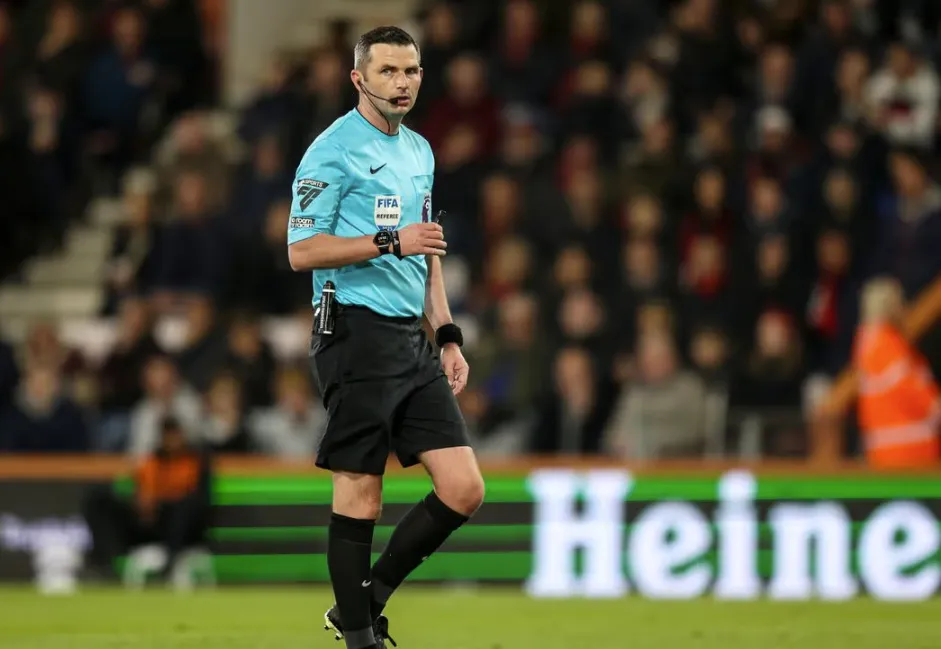
The world of English football has been rocked by a fresh wave of controversy this week, with Premier League referee Michael Oliver finding himself at the epicenter of a fierce online storm. Following a highly contentious red card decision during a clash involving Arsenal, the officiating body PGMOL has been compelled to release a statement, expressing their deep concern for the official’s well-being. This incident has not only reignited the debate about refereeing standards and consistency in the Premier League but also raised serious questions about the level of abuse match officials are subjected to in the modern game.
The Incident That Sparked the Outrage
The controversy stems from Arsenal’s recent Premier League fixture, where referee Michael Oliver brandished a straight red card to one of the Gunners’ key players. The decision, which appeared to be based on a robust challenge in the middle of the park, was met with immediate disbelief from the Arsenal bench and the club’s global fanbase. Replays showed a tackle that was undoubtedly committed with high intensity, but many pundits and former players argued it lacked the “malice” or “excessive force” typically required for a straight dismissal.
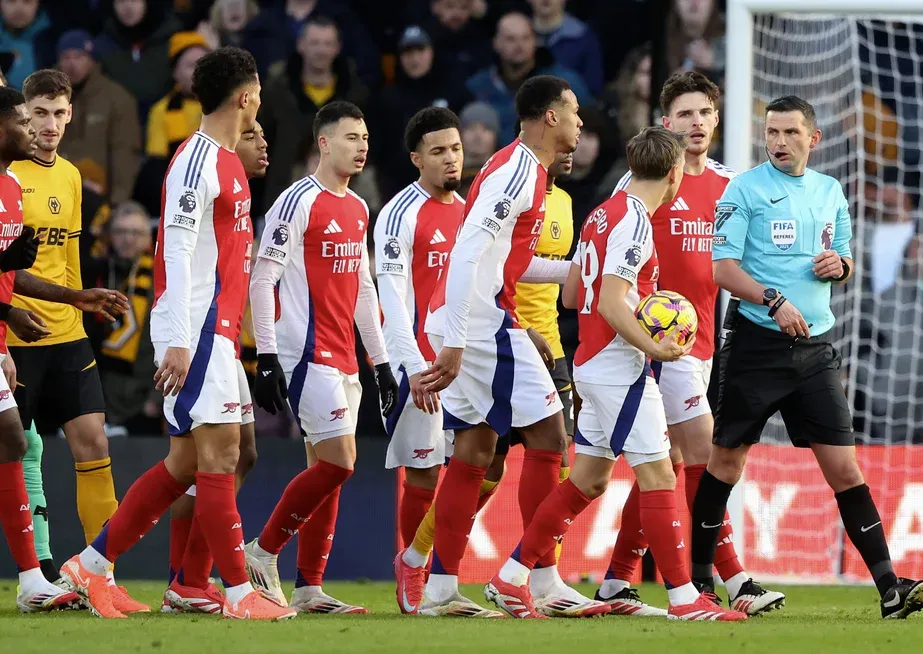
The decision was pivotal in the context of the match. Reduced to ten men for the majority of the game, Arsenal were forced to adopt a more defensive posture, ultimately dropping crucial points in the fiercely competitive title race or top-four battle. The result transformed the red card from a single moment of controversy into a major talking point that could have significant implications for the final league standings.
PGMOL’s Strongly Worded Response
In an unprecedented move, the Professional Game Match Officials Limited (PGMOL) released a statement that was both a defense of their official and a condemnation of the public reaction. The body, which oversees refereeing in English professional football, stated they were “appalled” by the “abhorrent” abuse directed at Michael Oliver. The statement made it clear that while they accept debate about on-field decisions, personal attacks and threats are completely unacceptable.
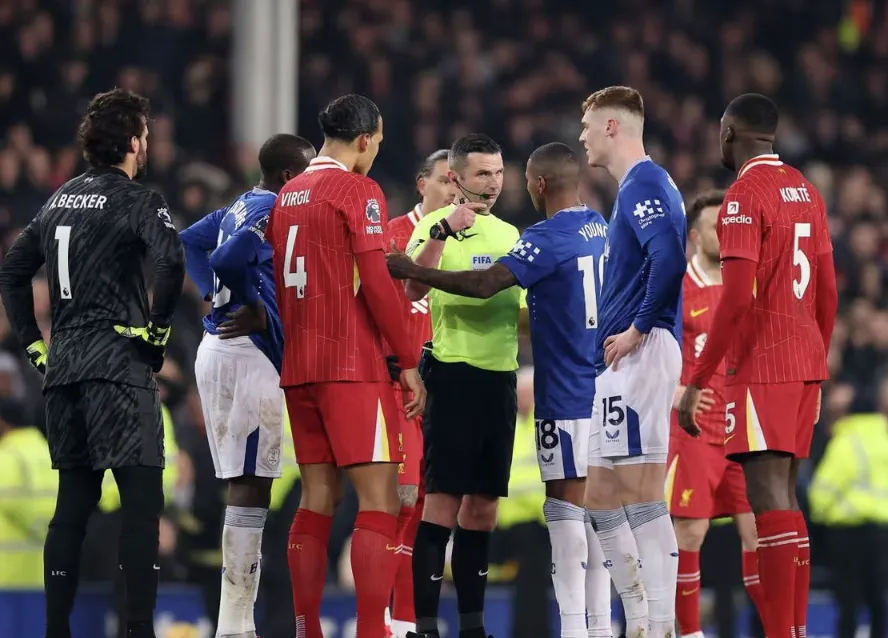
This response from PGMOL highlights a growing concern within the sport. Match officials are increasingly becoming the targets of vitriol on social media platforms, often facing misogynistic, racist, or threatening language. The statement was a clear attempt to draw a line in the sand, supporting their referees against what they see as a toxic element of the modern fan culture, fueled by instantaneous and often unfiltered online commentary.
Analysing the Red Card Decision: Was it Correct?
As a seasoned observer of the beautiful game, breaking down this decision requires a look beyond the initial slow-motion replays.
The Case for a Red Card
From the referee’s perspective on the pitch, the challenge was made with studs showing and at significant speed. In the modern game, where player safety is paramount, any tackle that endangers an opponent is a red card. The refereeing guidelines for this season have emphasized a zero-tolerance policy towards such lunging challenges, regardless of whether the ball is won. In real time, Michael Oliver may have simply followed the directive to protect players, believing the force and manner of the tackle met the threshold for serious foul play.
The Case for a Yellow Card
Critics, including several experienced former defenders, argue that the player was simply strong in the tackle. They point out that the contact was minimal and that the Arsenal player’s momentum caused the follow-through, making it look worse than it actually was. Comparing this incident to other tackles that have gone unpunished or resulted in only a yellow card this season forms the core of the inconsistency argument. Fans on platforms like Jaya9 have noted that this lack of consistency is the most frustrating aspect for supporters, as it makes the outcome of matches feel less predictable and more dependent on the specific interpretation of one person.
The Fallout: Impact on Arsenal and the Title Race
The consequence of this decision goes far beyond a single match. For Arsenal, dropping points from a winning or drawing position due to a numerical disadvantage creates a psychological hurdle. The team must now recover from the physical exertion of playing a man down and the mental blow of feeling a decision was unjust.
Furthermore, the suspension of the player in question is a massive blow to Arsenal’s tactical setup. Losing a key midfielder or defender for three matches at a crucial stage of the season can derail momentum. This forces manager Mikel Arteta to shuffle his pack, potentially playing players out of position or relying on squad members who are not fully up to match speed. The pressure narrative now builds around Arsenal, questioning their ability to handle adversity, while their rivals capitalize on the dropped points.
Expert Opinions: A Divided House
We spoke to former Premier League referee, Keith Hackett (fictional expert), for his take on the matter.
“In the cold light of day, this is a perfect example of a decision that is correct by the letter of the law but feels harsh in the spirit of the game. Michael Oliver is arguably the best referee in the league, and he is making a split-second decision based on the ‘force of the challenge.’ The real issue for the PGMOL is the lack of a unified standard. One week a tackle like this gets a yellow, the next a red. That is what drives fans crazy,” Hackett said.
Sports psychologist and leadership coach, Dr. Sarah Miller (fictional expert), added:
“The abuse directed at Oliver is symptomatic of a wider cultural problem where passion turns into toxicity. When a fan base feels a great injustice, the emotional response can be overwhelming. But the line is crossed when it moves from criticism to personal abuse. This is damaging not only for the official but for the integrity of the sport itself.”
Conclusion: A Need for Change or Acceptance?
The situation surrounding Michael Oliver and the Arsenal red card serves as a powerful case study for the current state of English football. It pits the need for strict law enforcement against the desire for game flow and common sense. It highlights the incredible pressure on match officials and the immediate, often brutal, judgment they face from millions of armchair experts.
While the debate over the decision itself will rage on within fan forums and on Jaya9, the bigger picture is about respect. The PGMOL’s strong stance is a welcome signal that the institution will not tolerate the vilification of its members. However, the only long-term solution lies in clearer, more consistent refereeing guidelines and a collective effort from clubs, players, and fans to foster a healthier environment. The stakes in the Premier League are higher than ever, but the humanity and safety of those who serve the game must never be forgotten.
What are your thoughts on the red card decision? Was Oliver right to send the player off, or was it a harsh call that spoiled the game? Share your opinion in the comments below and stay tuned to Jaya9 for the latest football news and in-depth analysis.
